

No, Really, I’m Fine.
Read this when you’re definitely not fine.

This year has been an absolutely shit show for me.
But before I dive into why, let me first say. Gratitude. The things I’ve mourned and am still mourning are trivial. I have watched as some of my peers lost parents, homes, even children this year, and I’m thankful that what I’m grappling with is relatively small in comparison.
That being said, this year has been an absolutely shit show for me.
So far this year…
I’ve mourned a traumatizing pregnancy loss.
Saw my four-year relationship end in betrayal.
Lost my dream job to budget-cut layoffs.
Then, recently, lost another dream job to budget-cut layoffs.
These things happen. And when they happen, people tend to check on you. A lot. And when people check on me, especially after a job loss, it’s difficult to be honest. It’s hard to say, “No I’m actually not fine; please help,” when it comes to matters of career.
It has been somewhat easier to recover from heartbreak. It’s easier to rage and go for drinks with my friends and talk about how hurt I am, mostly because people love getting the tea about a breakup, but also because there is less shame in being sad about love.
But being sad creatively? Professionally? That’s different.
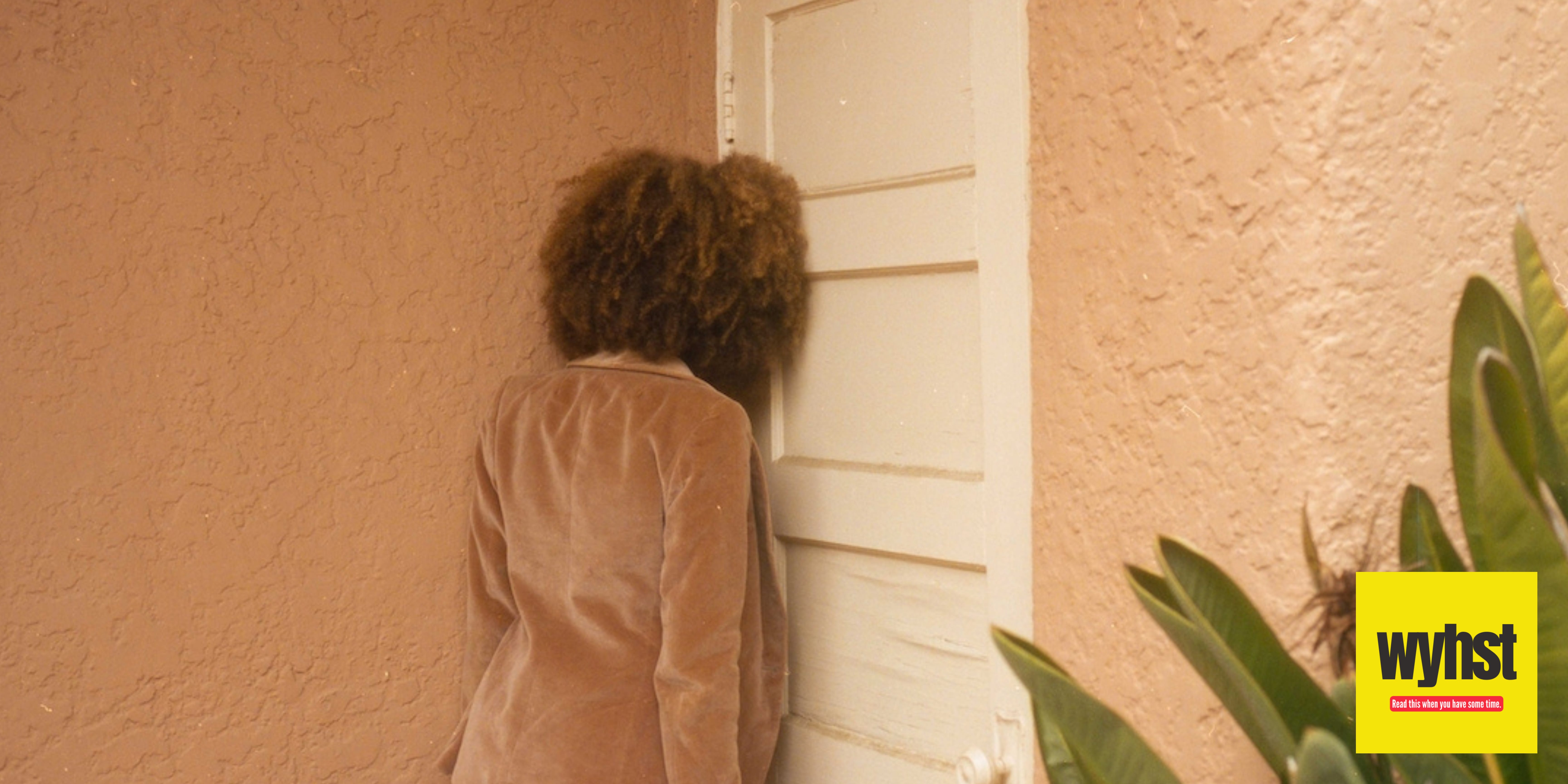
Either way, when it comes down to talking about sadness, no matter the root cause of it, it’s just easier to say, “I’m fine.” To let people know, this shit hasn’t kicked me down. I’m a survivor. My entire online brand has been wrapped in optimism for the past several years. So, facing my truth — that I have actually been in perpetual mourning for the past ten months — was difficult and still feels like some kind of universal joke.
Even writing this was hard because I thought to myself, “no one wants to read a sad thing.” As I write this, I wonder if you, the reader, preferred I wrote about my slow return to the dating scene, or the ‘boy math’ conversation that has been blowing up our timelines, or some other trending topic that isn’t such a downer.
And that’s kind of the issue, right? We don’t like making space for sadness. And when people are sad, we tend to believe that’s all they are. But among my moments of grief and frustration this year, I have also laughed my ass off. I have also seen my incredible circle of friends show up in ways that brought me so much joy I cried. I have also watched my kid start middle school and absolutely crush it. I have also reached a point in my co-parenting journey that dreams are made of. And I think in the coming weeks, I’ll write about those things too.
But right now, I want to be honest. I’m not really fine.
Not being fine comes with an additional layer of shame for Black women. We’re not supposed to fall apart, not really. Almost as if the value of our existence is measured by our resilience. If we’re a mess, if we’re emotional, if we’re confused, if we’re sad, we’re quickly labeled problematic. Dramatic. In our feelings. Crying over spilled milk is reserved for white women. My feelings about this year were especially hard to package and difficult to talk about, mostly because I felt like I was letting my ancestors down or something. Like I wasn’t being thankful enough for sheer survival.
I do get more fine every day. I am more fine than I was a few months ago, a few weeks ago, an hour ago. I might not be fine later today or tomorrow. Quantifying sadness is strange. Because recovering from things that hurt is never linear and never neat or tidy. But during this time, this fucking year, I have learned a lot about being sad. And in the vein of “I don’t know who needs to hear this,” I want to share what has helped me. In case you are sad today or will be tomorrow, keep these things in mind:
Find friends you can fall apart with.
This won’t be everyone. It might not even be the people you think it should be. One of my best friends, who I love and who has been my biggest supporter over the years, was not the friend I turned to the most through all of this. Surprisingly, it was his partner who understood my sadness on a deeper level and who could more easily accept the messiness of wanting to hang one day and needing complete silence the next. Of saying, ‘No I don’t want to do anything right now,’ and really meaning, ‘Please come drag me out of the house.’ These friends are precious, few, and so necessary.
It’s okay to need distance from what reminds you of sad things.
After the miscarriage, I didn’t want to be around happy couples with kids. One of my closest friends had a new baby, followed by a new husband. And as happy as I was for her, especially as someone so deserving of love and family, it reflected a truth that hurt my heart. That scene in And Just Like That when Seema tells Carrie that she couldn’t watch her be happy on vacation while facing her own loneliness hit me deep. It’s a loving thing, to be that honest. And it’s a loving thing when the friend you say that to hears it selflessly and says, “I get it.”
Self-medicate (or actually medicate).
Sadness can become chronic if you let it. It can embed itself into your DNA and start to feel less like an emotion and more like a vice. Medicating through it can look like anything. Sometimes, it’s a prescribed anti-depressant; other times, it’s forcing yourself to take a walk every day, or rolling a joint after dinner, or taking a vacation alone, or starting therapy. Whatever it is that brings joy back into your heart or any sense of relief from the pain you feel, do it. As long as it’s not crack or something. Please don’t crack.
Stop saying, “I’m fine.”
Because if you’re not fine, the least you can do is show up for yourself in that. And allow people to show up for your truth, not your curated false reality. Sometimes, people can’t handle your sadness, and that’s okay. Not everyone is equipped to be in that space with you because we are all going through our own cycles of joy and pain. Forgive the people who can’t handle it; it’s not personal. But start by being truthful when people check on you. It’s okay to say, “I’m not fine,” “I’m sad today,” “I’m feeling hopeless right now,” instead of the canned response society has taught us to have on the ready.
Lean into routine.
For parents and caretakers, this is less optional. Those of us who are raising kids or caring for loved ones daily really have no choice but to maintain a routine. But if you don’t have that kind of responsibility glaring at you every day, routine can be a lifesaver. Write it down and stick to it, even when it hurts. Find a new rhythm and let time pass in the background. Sadness will happen, and joy will return. So, don’t let your life fall apart in the meantime.
Fuck your routine.
Yes, this completely contradicts the last thing, but hear me out. Give yourself some time to fall apart. Take a few days, a week, maybe two if you need it. Lean into your desires for a bit, be spontaneous and impulsive. Chop your hair off, get a tattoo, have a one-night stand (safely, of course) or indulge in self-pleasure for an entire day. Watch movies from your childhood, get out of town, sleep in late, stay up all night. Whatever you want. While adulthood can be crushing, it comes with the benefit of choice. You can actually do whatever you want. And sometimes, when things or people leave, we’re left with the space to be more indulgent. So commit to some time of chaos, then get back to reality.
Get it all out.
I am a huge proponent of journaling. I have kept a journal in some form since I was six years old. I have written in cute diaries, scribbled in ugly notebooks, recorded audio entries while I walk, and even video journaled through my pregnancy to document my changing body. Journaling doesn’t have to be pretty, and it doesn’t have to make sense to anyone but you. But there is a benefit in the release. One of those benefits is giving space and form to your emotions, which makes them feel more real, more valid. Another benefit is that you get to look back on how you felt yesterday or, last year, or a decade ago and realize that you survived something that felt enormous at the time. All of these things we go through — good and bad — are important fragments of our big picture. There is beauty and healing in recording your own history.
Lastly, boundaries.
This part might be harder for some of us, and for that, I highly recommend this book by Nedra Glover Tawwab. But establishing new boundaries, even temporary ones, while you move through periods of mourning and sadness is extremely helpful. For me, that meant telling people I needed space. All the check-ins and worried friends and family came from a good place but also required me to do the emotional work of responding, conversing and explaining things I didn’t always want to think about. So, I told a few folks that I would be scarce on text. That I would be quiet if we hung out. That I couldn’t show up for them as a whole person and, therefore, may need to not show up at all for a bit. The interesting thing about setting boundaries like this is that your people — the ones who actually love you and not just how you make them feel — won’t punish you for having boundaries. So, set boundaries and pay attention to who respects them.
In conclusion, I hope we, as a society, as friends and as individuals, can make more loving space for sadness. I hope that we can stop attaching shame to this emotion, which is just as vital and important as happiness. Sadness helps us pay attention to our hearts and to the parts of us that need healing. Sadness helps us release things we might unnecessarily cling to in times of joy. Sadness helps us reflect and be gentle with ourselves, and remember our own delicate humanity. Even though this year has had its way with me, I’m actually grateful that it’s forced me to stop and care for myself so intentionally. So, I may not be “fine”, but I am still exactly where I need to be.
‘Even writing this was hard because I thought to myself, “no one wants to read a sad thing.”’
Perhaps that feeling tugging on your subconscious and asking you to face your fear of sharing a sad thing was me. I desperately wanted to read a sad thing - a REAL thing, because life is just sad right now for many. So thank you for writing something real and raw. Thank you for giving it language and creating space. I am sorry life did you like this. I am confident in what your love and mind will alchemize these painful experiences into. I love you and I’m right here making sense of the mess alongside you 💛
This right here!! I'm someone who understands and accepts sadness and even encourages folks at time to lean into to it at times. However, for many of the reasons you mentioned above, I've found very few people who are able to accept sadness or hold space for it when I'm the one experiencing it. Thank you for putting your feelings into words and consequently nudging me to get back to journaling and process my own feelings about the mess that has been 2023. ♥️